
Dolores Daily Arrest Report Limits
Nothing on the county's web pages lists Dolores County bookings for today, the prior 24 hours, or the prior 48. The Dolores County Sheriff's Office posts contact and dispatch details only. No roster appears there. There is no daily arrest table and no public booking-photo stream. The regional detention page adds one firm fact. Montezuma County detention deputies handle booking, bonding, and transport. No Dolores-only daily view exists in that public material.
That gap is not an empty arrest report. It just means the web cannot answer the question. Dolores County runs no jail of its own, so a person arrested by a county deputy or a Dove Creek officer is typically transported to the Montezuma County Detention Center in Cortez. The arrest report may stay with Dolores County. The intake record sits regionally. A court event may then show up through Colorado Judicial records, with each source marking a different stage.
Check Dolores Arrests Today
Skip the blank search box. Work agency by custodian instead. Begin with where and when the arrest happened. The Dolores Sheriff is the local law-enforcement contact, while Montezuma detention is the best documented regional booking destination. Ask whether the person was booked, where custody sits now, and which office owns the record, keeping the name, the event time, and the arresting agency at hand.
- Check the official Dolores Sheriff page for current contact information and confirm whether the Sheriff handled the event.
- Call the Dolores County Sheriff's Office at 970-677-2257. Ask which facility received the person and whether the inquiry belongs with dispatch, records, or detention.
- Contact Montezuma County Detention Center at 970-564-4995 if regional booking is indicated. Ask for current custody status, not a prediction about the case.
- If immediate custody cannot be confirmed, ask which office holds the booking report and submit a narrow Colorado criminal-justice-records request.
- Use the Colorado Judicial docket for later hearing information. A docket entry is not a live jail status or final disposition.
The source split matters here. An officer creates the first event record, detention staff log intake, bond, transfer, and release, and the court files hearing and disposition records. Asking one office for all three slows things down. For wider county paths, the Dolores County recent-arrests hub sorts out each record holder.
Dolores Arrest Fields to Request
No public same-day view exists for Dolores County. So none of these items works as an online column you can browse. Colorado daily jail materials point to a core set of fields. The regional system may hold more. Ask the custodian what exists for the named booking and what may lawfully be released.
| Field | What to ask for |
|---|---|
| Name and entrance date | The booked name and the date the person entered detention. |
| Booking date and time | The intake timestamp, if maintained and releasable. |
| Arresting agency | The office that delivered or charged the person. |
| Charges | Charges recorded at booking, organized by code or jurisdiction where available. |
| Bond and status | Recorded bond plus any release or transfer event. |
| Booking photograph | Whether a photo exists and can be supplied by request. No official public gallery was found. |
A booking number, classification, or transport note may also sit in an administrative file. An identifying descriptor may sit there as well. Dolores County does not list these as public online fields. So the request should ask, not claim. Some material stays off limits. A response may omit juvenile, sealed, suppressed, protected, or investigatory records. What comes back depends on the custodian and the specific booking.
Dolores Arrest Confirmation Chain
Start the fallback with a live person. Dolores County dispatch is described as running around the clock. Not every record request runs at all hours. Ask for a contact or a custody confirmation. The regional facility can confirm whether it holds the person, if policy allows. A released person gives no live answer. The booking report still exists.
For paperwork, the Montezuma County Sheriff records page carries the request process when Montezuma holds the booking. That office lists booking reports and mug shots as requestable products. It will first confirm the event is the Dolores County one. If the arrest report itself is the goal, ask the Dolores Sheriff whether it kept the incident record or passed part of the file along.
Release or transfer alerts are different. A VINELink inmate check helps only if the facility takes part, and the county pages do not say whether Dolores or Montezuma does. Treat a blank result as inconclusive. Go back to the responsible office.
Note: A records request serves historical access; it is not a substitute for urgent same-day custody confirmation.
Official Dolores Arrest Starting Point
The official Dolores County Sheriff source shows the contact and dispatch route. No booking feed is posted there.
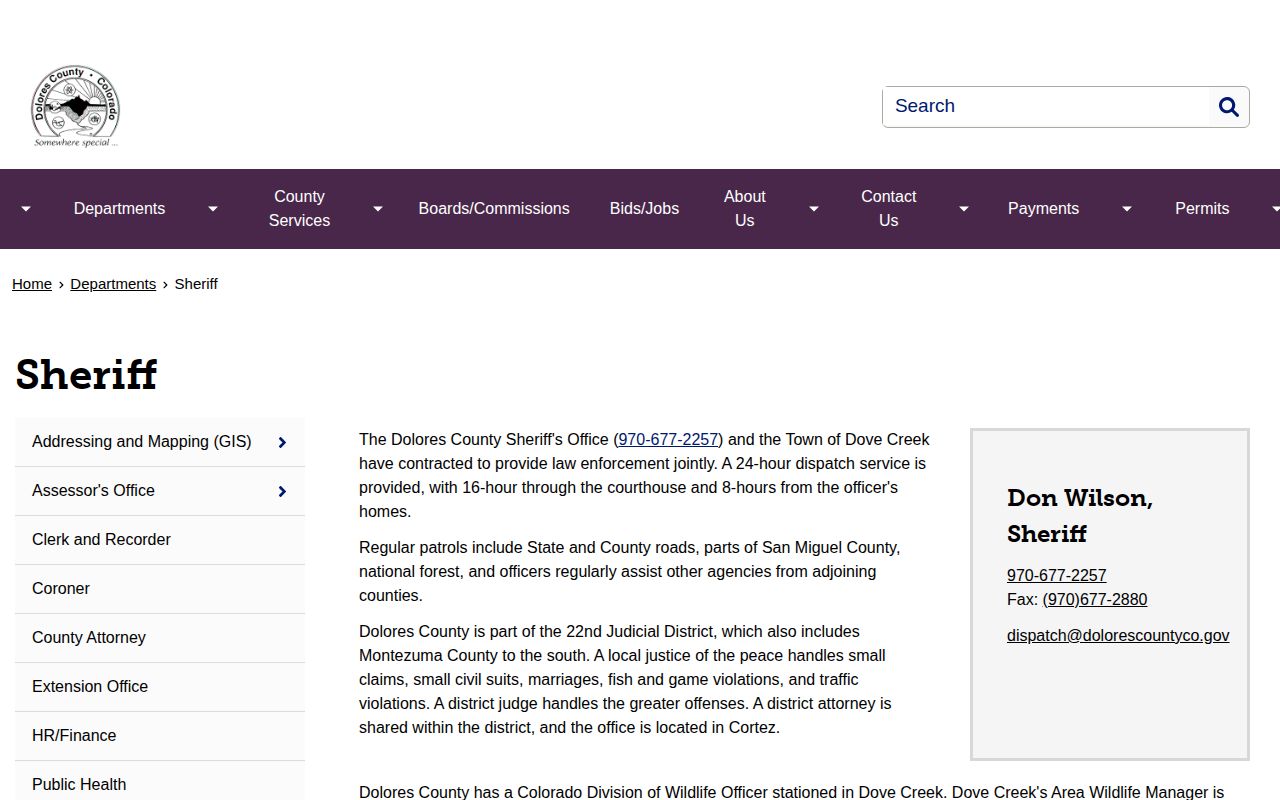
That page backs a contact-first search. It is not a roster, and it does not prove that no one is in custody.
Why Dolores Arrest Results Lag
Dolores County publishes no set schedule for its arrest information. There is no stated refresh cadence, weekend plan, or rolloff window. That makes timing estimates guesswork. A fresh arrest can sit invisible for a while. The person may still be riding in from a remote corner of the county. Staff may not yet have settled where the individual will be held. Some arrests end with a citation and never become a jail booking at all.
Gaps also appear after booking. Someone might walk out fast, get transferred elsewhere, or be booked under a misspelled name. A record restriction can hide the file. VINELink may lag or receive nothing from the facility. Court dockets sit even further behind. They show a first appearance or bond hearing rather than minute-by-minute custody.
Treat timestamps carefully. Arrest time, arrival, booking, release, and court time can each differ. A search for who was arrested today can return a report dated today. The news piece trails behind. For a firm answer, call the office directly.
Request a Dolores Booking Record
The regional public-records portal offers an online starting point when Montezuma County likely holds the booking record.
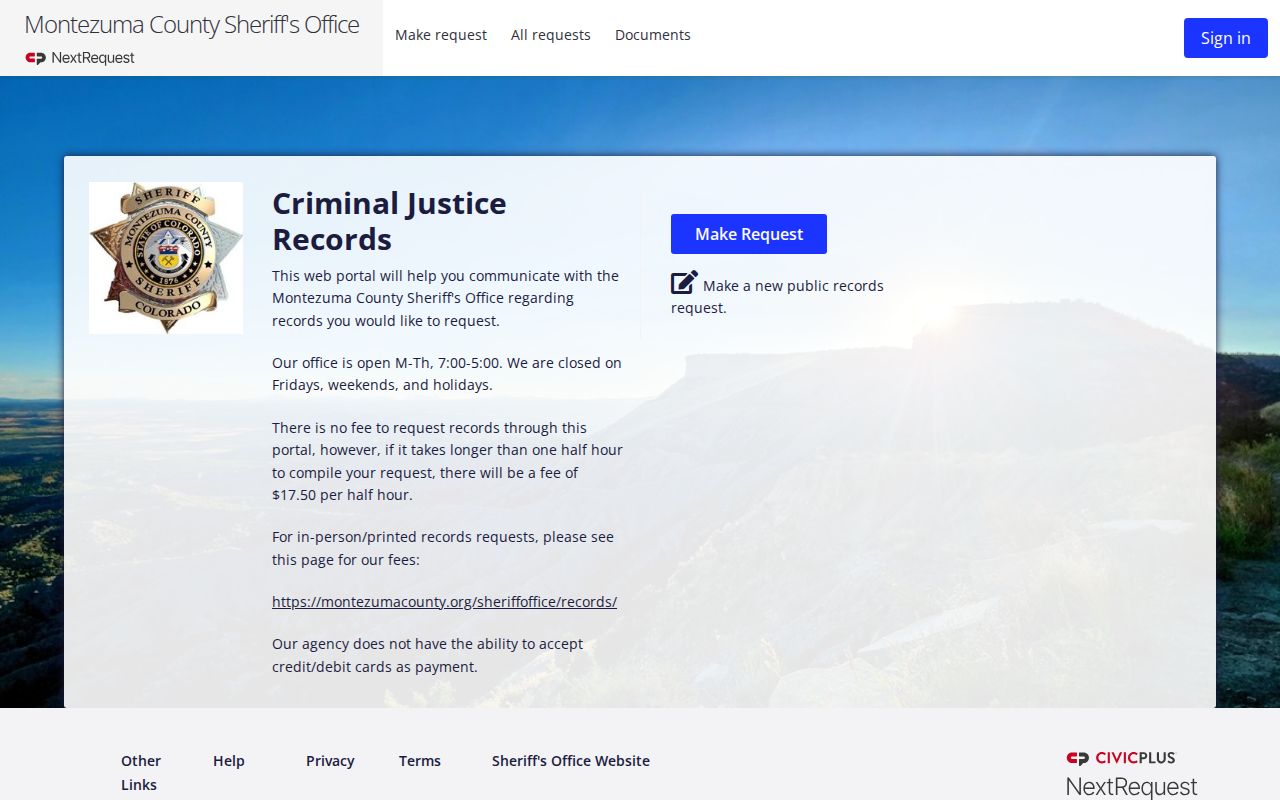
Remember that the portal handles focused requests, not a live arrest feed. A good filing names the person, gives an approximate date, identifies the arresting agency, and spells out the booking item you want. Before submitting anything, confirm which office owns the record. A narrow request can cover the booking report, entrance and release dates, charges as booked, bond entry, the arresting agency, and any releasable booking photo. Skip private details the form does not require. If Montezuma does not hold the file, ask whether it was returned or whether the Dolores Sheriff is the true custodian.
Dolores Arrest Custody Stages
Where a person sits changes the source you need. Right after an arrest, the individual may still be with the arresting agency. Once booked, the regional jail likely holds the custody record. After release, live status can disappear. The booking report stays requestable. A later state sentence shifts the search to the Colorado Department of Corrections. Federal custody runs through separate federal systems.
- Arrest
- An officer takes a person into custody based on alleged conduct or a warrant.
- Booking
- Detention staff record identity, charges, custody details, and often a photograph.
- Bond
- A court-set or legally controlled condition tied to release. It does not decide guilt.
- Disposition
- The court's outcome, which may differ from the charge listed at booking.
Dolores County and Montezuma County do share a judicial district. Still, court geography and custody geography are different things. A Cortez booking does not prove the arrest location. The arrest may not have happened in Montezuma County. A Dove Creek court entry does not prove the person remains jailed.
Dolores Arrest Charges and Court
A daily arrest record opens a process rather than closing it. Booking staff log what they are told at intake. Prosecutors and courts sort out which charges actually proceed. Some counts get amended or dropped. Others lead to acquittal, plea, or conviction. For the legal outcome, the court disposition is the source.
The Colorado Judicial docket can surface a scheduled hearing, case number, courthouse, or party entry. It is not a daily jail report, though. A hearing label rarely states the final result. When the outcome matters, request the register of action or disposition document from the court.